The latest live-in personal care attendant hates me. I keep a mental record of the price paid for her resentment in an endless tally of unmet physiological needs.
Loitering lazily near the door to my shared room, she's still in her night cap, coffee in hand. She glances disapprovingly from me to my roommate before disappearing into our bathroom to shower.
If she were kind, I’d have requested a blanket. If she was indifferent, I’d have noted my catheter bag needed draining.
But she decided she hated me the moment she laid eyes on me, so I say nothing. Let her enjoy that coffee and a nice shower and likely she’ll berate me less during my morning care routine.
To her, I’m a body. A body with fluids and without motor function. A body she’s not paid enough to take care of at a facility that doesn’t give her a day off.
In the perspective of those who exploit her labor, and my disability, I’m not even a body, just a name, a Medicaid check.
Of course some caregivers are in it because they care. I’ve gotten lucky with multiple. If not for their tender care, humanity, dignity, and grace, I would certainly be at risk of internalizing the perspectives of the caregivers who hate me for my needs.
At first, perhaps, I wouldn’t have begrudged them any degree of neglect or cruelty. I hated my broken body with its supine and stubborn limbs more vehemently than another person possibly could.
I’d wrapped my worth up tight in motor function and pretty privilege until life swept my feet out from under me.
Even now sometimes I bite back the urge to point to the contributions that able body made to the world.
This body birthed and raised a child.
I worked in the trades; she lacked nothing.
But in the years since punching my ticket to the margins of society with only a parking pass as incentive, I’ve cultivated a new sense of pride in my work.
I’m late for it now, my deadline to turn in a piece for the law firm. And this book I’m writing isn’t going to write itself.
But the caregiver is still in the shower, loud gospel music floating into my room, disturbing my terminally ill old roomie and she cries out.
Finally it’s my turn. She’s allowed my catheter bag to fill up, and the bed is soiled. She scowls at me.
“She pissed the bed again,” the caregiver grumbles loudly, announcing to her coworker in the kitchen. The whole house probably hears. My cheeks burn with shame as if I’m a naughty child, but the embarrassment quickly fades to indignation.
I’m not a naughty child. I’m an adult with valid contributions to make in life. I just need a little extra help.
Those who shame people for needing help should truly be ashamed of themselves.
It's unsurprising, however unsettling, that those obligated by employment to meet those needs do so with a chip on their shoulder.
The owners of the facility are primarily concerned with the lucrative aspects of long term care. They hire immigrants on temporary visas, promising some kind of American experience that doesn’t involve around the clock catering to this entitled woman who can only move her head.
She grumbles at my body while she dresses it.
My arms and legs are stiff and contracted. She knows moving slowly is less painful for me. She hurries.
“You’re not the only resident here you know.”
As if she gives a damn about any of us.
My limbs wouldn’t be so stiff if I had access to regular passive range of motion therapy. At the last facility it had been denied entirely.
Physical therapy was for restorative therapy services, insurance said. Prevention of deterioration wasn’t covered.
I tried to appeal to the rushed aides but they seemed to have been taught that stretching me was an unnecessary “extra”, something done “if there’s extra time” but there never was.
This part of my care isn’t “extra”. That’s not equity.
Finally I called the director of nursing. I explained that just a few minutes of stretching made a huge difference and I could see I was already deteriorating. My hands were balled in fists and my knees excruciating to bend.
“You know, you’re going to deteriorate anyway,” the director of nursing retorted.
In that moment I felt so small, so helpless. I didn’t matter to the world. My pain didn’t matter. Let me suffer. My body? Just let it cripple up. No one cared.
Tears stung my eyes and indignation dripped from my tone when I found my voice to reply.
No, not at all. I am well educated in spinal cord injury and contracture and spasticity can absolutely be prevented with adequate physical therapy. Range of motion exercises are a vital part of quadriplegic care and make a big difference in our quality of life.
As she attempted to avoid accountability for the neglect and subsequent deterioration in this way I could only think with horror of the people who don’t have the voice or the words to demand proper care. Were their needs neglected too, comfort not considered?
My rage against the machine that sorts people who are different into cold little boxes away from mainstream society is nothing short of righteous.
Upon advocating for my right to bend my knees and spread my fingers, I realized that deteriorating is what happens in understaffed facilities.
Without a federal standard for “residents per aide” and “time per resident” in nursing facilities of course the health and the bodies of the residents are going to deteriorate faster. When State insurance doesn’t cover passive range of motion for non ambulatory residents those individuals will deteriorate faster.
The biggest problem of all is the monopoly the institutions have on long-term care. That’s why I’m here. Life would look much different if my government benefits had covered adequate home and community based services instead.
So many long nights of suffering and morning guilt trips would have been avoided. The muscles in my arms and legs would have experienced less atrophy. My tailbone would not have been compromised from the pressure of extended hours in bed. My self worth and pride would not have been stomped on by overworked, understaffed caregivers.
I do not report the neglect because I know how far it will get me with management. Last time I complained about the long hours confined to bed, management had gas-lit me with accusations of lacking appreciation for corners they’d claimed to cut for me.
So I ignore her even as she makes me her punching bag.
“Look at me, I’m sweating.”
Now she’s mad I don’t want the air conditioning unit by my bed turned on. My body can’t regulate its temperature so well. I’m in extreme discomfort, shivering, teeth chattering.
She switches the unit on anyway.
She will insult my character as a person repeatedly if I display impatience or anxiety or if I act entitled to care. I wish I had thicker skin. At least I’d be warmer.
When the tears come they aren't for theatrics but she berates me for them.
“You need to think about your caregivers.”
I close my eyes. I do. I love my caregivers and sometimes they even love me.
If there’s one thing disability has taught me it’s gratitude.
I have gratitude for the hands of even the cruelest caregiver but there’s a special place in my heart for the compassionate ones, and the ones who see me.
Caregivers seem to either see me as a strong and capable woman who has rolled through the fire and lived to help drag others through it, and they respect me and tend to my needs with concern and take advantage of my knowledge and everything I can teach them- Or they are frustrated and uninterested because they see me as nothing but a burden: mouth to feed, ass to wipe, way too many pillows to adjust at night.
There will always be caregivers in whose perspective I will be nothing but a burden. No amount of friendly charm, shared anecdotal wisdom, self-deprecating humor, or patience and compromise on my part will make them see me. Their job could be much more rewarding; I love to teach my caregivers new things, make them laugh, inspire them. Many turn into longtime friends.
I have a lot of love for my caregivers who see me as not a broken woman with nothing left to give, but an ambitious, driven and relatively young woman with a lot left to give, a life ahead of me and goals, and a productive and busy mind full of anecdotal wisdom. Those who look at me like my life is over and I don’t matter anymore if I ever did anyway, see me as nothing but a broken body with a life behind me- they would likely be exactly that in my shoes. I don’t need weak people like that as my caregivers.
I’m not a nightmare to take care of. I’m a nice lady who can be interesting and fun to talk to while caregivers perform my routine care. Being guilt-tripped for expecting paid caregivers to do their job efficiently is not a problem I should be forced to face.
I was institutionalized at 37, victim of the national caregiver crisis but my residency is temporary. I’m in grad school and working with vocational rehab. The goal is independent living, and the capacity to pay for quality in home care. It’s a yard, a dog, a van. It’s a career. It’s being part of the world out there.
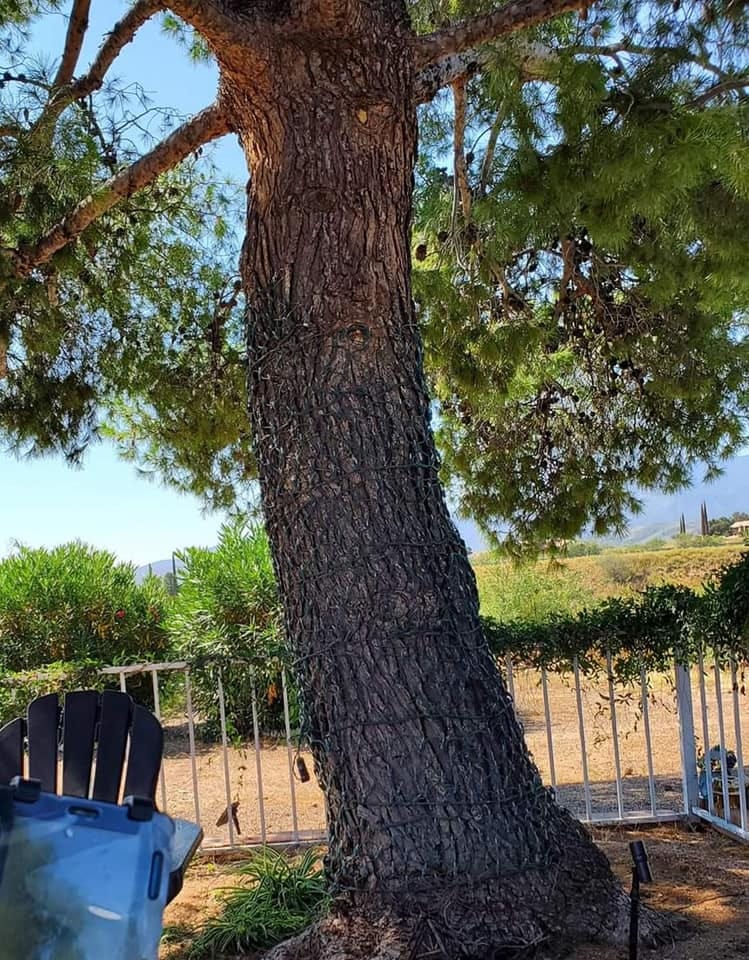
For now, I pass my days outside under a towering pine tree. I stay busy at putting forth good into the world. I volunteer for nonprofits and write for humanitarian organizations. I talk to my therapist and practice cognitive skills to shape a positive perspective and view of myself.
I love this body that “pisses the bed” if a caregiver doesn’t do their job right. I’m entitled to quality care. Every single person in a country this wealthy should be. I’m over here pulling up my bootstraps with no hands; I won’t let my character be diminished by people who my government holds accountable for my care. I’ve bit my tongue to save my ass but my voice demands an ear now.
I’m resilient and relentless. I’m compassionate and sensitive. I’m proud of who I am. Hanging onto her and believing in her in the face of doubt, discrimination and downright neglect has been challenging.
But I’m here.
Out in the sun under my tree I breathe easy.
I remind myself that other people’s opinions of me aren’t necessarily valid. I hear my Mama’s voice reminding me that all that matters is what I think of myself. I recall the words of my favorite philosopher Marcus Aurelius who said to be your own spectator and seek your own applause.
Then I spend the morning paying these ideas forward because that’s who I am.
I just need a little help.